A tank heater that runs cold, makes noise, or leaves water on the floor needs a closer look. A leaking connection and a leaking tank can look similar from across the room.
Diagnose no hot water, short hot-water cycles, rumbling and visible leaks.
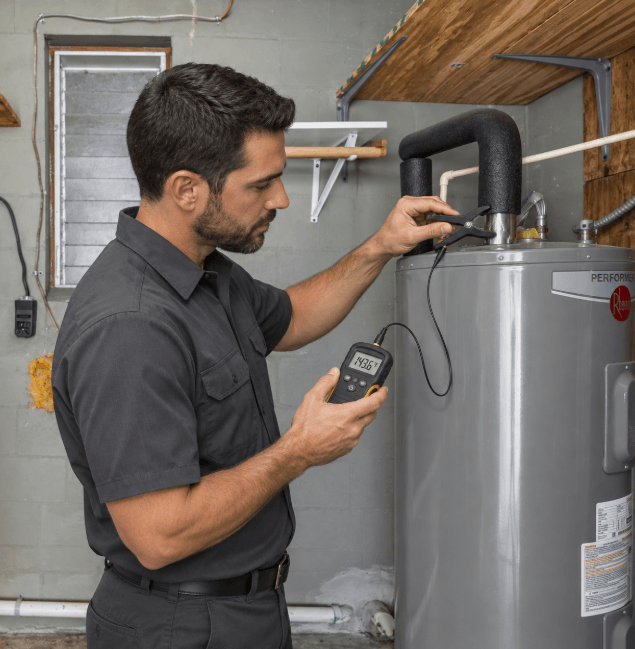
Check electric heating elements, thermostats and gas ignition components as applicable.
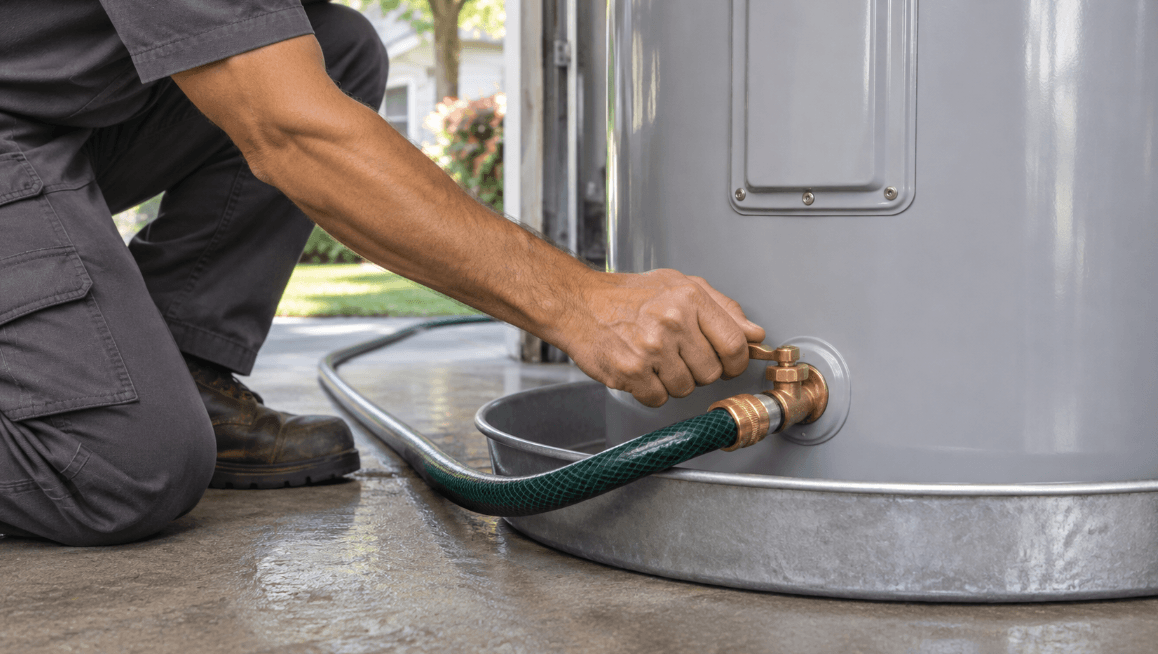
Assess valves, anode rods and sediment flushing when the tank is still serviceable.
Hot water that runs out early can point to sediment, a failed lower element, or a change in household demand. A problem at just one fixture may come from the fixture or its mixing valve. Note which taps are affected and whether the problem started suddenly.
Find the source of a leak
Water at the bottom can travel down from a connector above the tank. A drain valve, relief discharge or tank seam can also be the source. Relief-valve discharge calls for checking the underlying pressure or temperature condition. A failed tank body typically calls for replacement.
Compare the repair scope
Ask which part failed, whether it is available and whether parts coverage still applies. A routine flush addresses sediment. An electrical fault, ignition problem or active leak needs its own diagnosis.
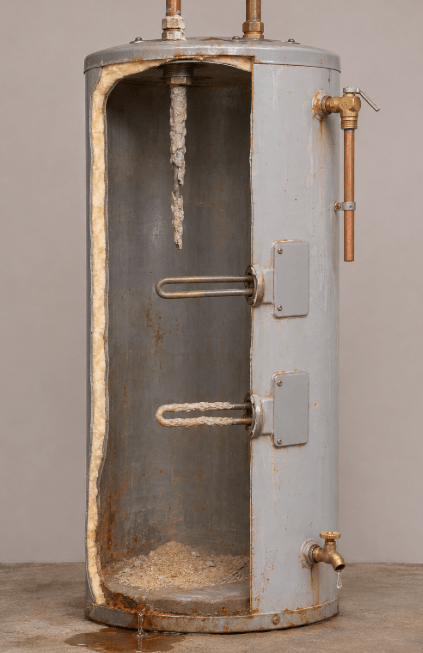
Five Places a Water Heater Can Fail
Match each numbered marker to the repair notes.
1 Temperature and pressure relief valve
Why it happens The valve may open because water pressure or temperature rises too high. A worn valve can also seep after the pressure returns to normal.
Repair Check what caused the discharge. Correct the underlying issue or replace a faulty valve with a properly rated one. Never cap the outlet.
2 Anode rod
Why it happens This rod gradually corrodes to help protect the steel tank. Water chemistry and use affect how quickly it wears.
Repair Replace a depleted rod while the tank is sound. A new rod cannot repair a tank that already leaks through its wall.
3 Electric elements and thermostats
Why it happens An element can fail electrically or collect mineral scale. A thermostat can also stop switching the element on or off correctly.
Repair Test the controls and elements. Replace the failed part or a leaking element gasket when the tank itself remains intact.
4 Bottom drain valve
Why it happens Grit can keep the valve from closing. A worn seal or a leak around the threads can also cause dripping.
Repair Identify the leak at the spout or threaded connection. Replace a damaged valve if the tank fitting can still hold a seal.
5 Sediment and rust at the base
Why it happens Minerals settle at the bottom and can cause rumbling or clog the drain. A puddle with rust may come from a corroded tank or a leak that ran down from above.
Repair or replace Flush sediment from a sound tank when appropriate. Replace the heater if water comes through the tank wall or seam.
Frequently Asked Questions
Does flushing fix a heater that will not heat?+
A flush addresses sediment in a serviceable tank. Loss of heat can also come from a failed element, thermostat or ignition system and needs diagnosis.