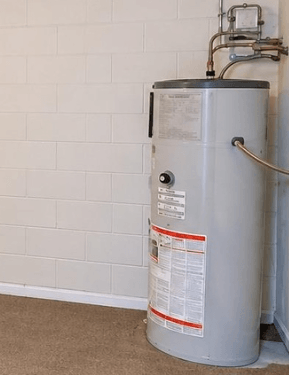
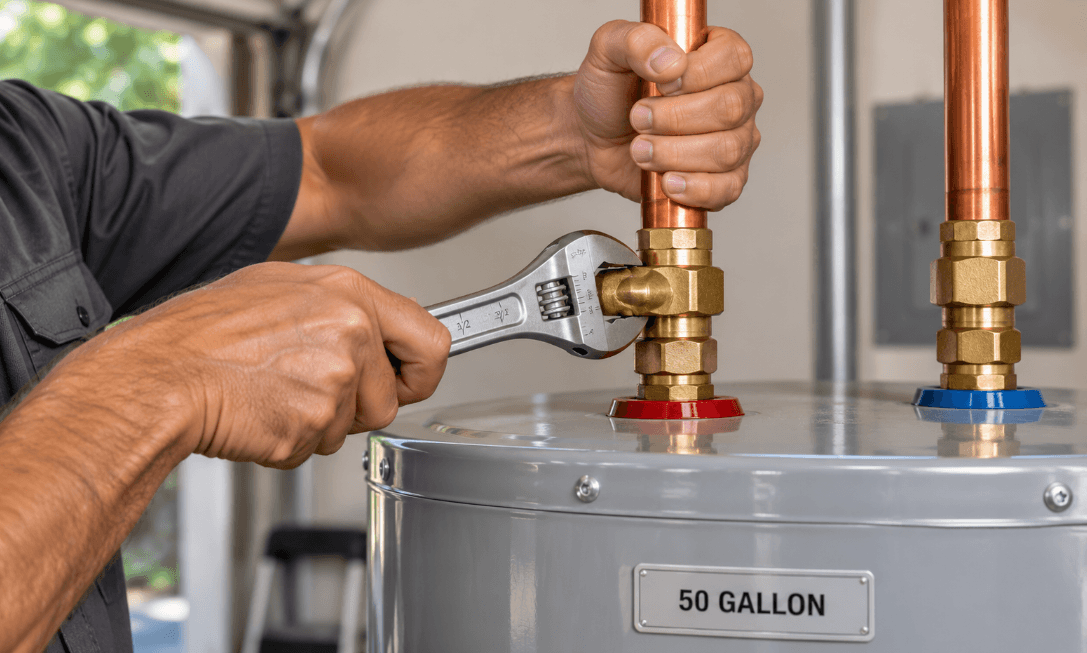
A like-for-like swap can make sense when the old heater fit the space and supplied enough hot water. Use replacement as a chance to correct recurring shortages or difficult access.
Compare same-capacity and higher-recovery replacements.
Review common 30, 40, and 50 gallon tanks and larger options where demand warrants them.
Record the old tank capacity, fuel type, and model. A tank that holds 40 or 50 gallons is a common starting point. The first-hour rating accounts for stored hot water and recovery during a busy hour. Several back-to-back showers can change the right choice.
Check the new tank against the space
Measure height, width, and the path through doors. A replacement with the same labeled capacity can have a different footprint. In a Hollywood Beach condo, confirm whether management must coordinate a shared shutoff or reserve a service elevator before the old heater can come out.
Review the full replacement scope
An estimate should distinguish the unit, labor, disposal and any required valve, pan, discharge or connection updates. Hollywood requires a plumbing permit for installation or replacement. For a property outside the city, check the permitting office that serves that address and confirm who handles inspection.
Why it happens The valve may open because water pressure or temperature rises too high. A worn valve can also seep after the pressure returns to normal.
Repair Check what caused the discharge. Correct the underlying issue or replace a faulty valve with a properly rated one. Never cap the outlet.
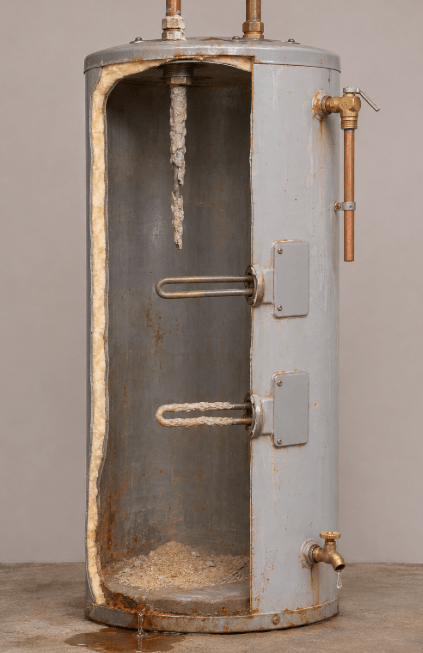
2 Anode rod
Why it happens This rod gradually corrodes to help protect the steel tank. Water chemistry and use affect how quickly it wears.
Repair Replace a depleted rod while the tank is sound. A new rod cannot repair a tank that already leaks through its wall.
3 Electric elements and thermostats
Why it happens An element can fail electrically or collect mineral scale. A thermostat can also stop switching the element on or off correctly.
Repair Test the controls and elements. Replace the failed part or a leaking element gasket when the tank itself remains intact.
4 Bottom drain valve
Why it happens Grit can keep the valve from closing. A worn seal or a leak around the threads can also cause dripping.
Repair Identify the leak at the spout or threaded connection. Replace a damaged valve if the tank fitting can still hold a seal.
5 Sediment and rust at the base
Why it happens Minerals settle at the bottom and can cause rumbling or clog the drain. A puddle with rust may come from a corroded tank or a leak that ran down from above.
Repair or replace Flush sediment from a sound tank when appropriate. Replace the heater if water comes through the tank wall or seam.
Frequently Asked Questions
Do I need the same gallon size again?+
Use the old size as a starting point. Compare first-hour ratings and peak demand if the old heater ran out during normal use.